
Godspeed Price Guide 2026: What Every Category Costs
No official Godspeed price list exists. The label puts out no public RRP document, declares no seasonal increases, and publishes no wholesale sheet for shoppers to consult. What you get instead is a live catalogue, a spread of stockists, and an active resale market, three sources that can be checked against each other. Every figure here is a market estimate observed in September 2026, sorted by category so a normal figure stands apart from a suspicious one. Prediction of the next drop is not the aim; a defensible band is, so a number far outside it prompts a second look. Nothing here comes as a quote from the brand, because the brand publishes none.
How These Numbers Were Gathered
These ranges are drawn from asking prices visible across the brand’s own catalogue, its wholesale stockists, and resale listings, all captured on a single date. It matters because prices are not stable: a piece can launch at one figure, sell through, and reappear months later at a resale ask unrelated to the original. When a particular piece anchored either end of a band, it is named so the figure can be traced rather than taken on trust. Some categories rest on a single observed data point, which is a weaker signal than a spread and is flagged as such. Search demand for terms like god speed clothing blends people looking for the NYC label with people looking up the dictionary word, so much of the pricing content online is not describing this brand at all. Read what follows as a timestamped snapshot, not a permanent tariff.
The 2026 Category Table
Everything discussed below sits compressed in the table, which makes it the one godspeedshirt.net place where every category lines up together. The ranges are deliberately wide, because a single category can hold both a plain washed piece and a heavily embroidered flagship. Named anchors appear in the third column so you can see which product produced each extreme. Resale is kept on its own row for a reason: a lowest ask is a fundamentally different number from a retail price and must never be presented as one. Categories built on one sighting are marked, since they describe a single product, not a pattern. Take it as a picture of the market on one day in September 2026.
| Type of piece | Observed 2026 range (USD) | Anchors, notes |
|---|---|---|
| T-shirts | $128-200 | Graphic tees mostly $150-170; sleeveless $170; long sleeve $200 |
| Hoodies, pullover and zip | $200-270 | Seeing Double near $200; R.O.D Hoodie $270 retail reference |
| Sets and sweatsuits | $155-360 | Vital sets from $155; OG Logo Sweatsuit V2 $295 |
| Shorts | $120-200 | Courtside at $120; OG Logo Nylon at $130; Militia Cargo V3 at $140 |
| Cargo pants, full length | $350 | Single sighting: the Wax Flare Premium, 3M reflective |
| Denim, premium | $250 | Infinity Denim V2; GS 4Ever Denim Jacket also $250 |
| Caps and beanies | $60-150 | Beanies at $60-120; GS Forever trucker at $125-150 |
| Belts | $250 | A single observed point |
| Slides, rubber | $160 | One observed data point |
| Watches | $80-100 | The cheapest branded entry observed |
| Resale apparel, lowest asks | $75-297 | Approximately 40 apparel listings on the StockX brand page |
T-Shirts and Tops: Where the Ladder Starts, $128 to $200
Tees are the broadest and most consistently stocked category, setting the floor for decorated apparel. Observed in 2026, most godspeed shirts fell between $150 and $170, which is where standard short-sleeve graphics sit. Below it, the band reaches down to about $128 for the simplest pieces, and above it the price moves with construction, not with how big the graphic is. Sleeveless pieces showed up near $170 and long sleeves at about $200, a normal premium for extra fabric and an extra placement. Layered tees, where a second body is stitched in to imitate two shirts worn together, sit toward the upper half for the same reason. If someone quotes you under $100 for a current-season tee, the burden of proof is on the seller.
Fleece, Sets and Sweatsuits: $155 to $360
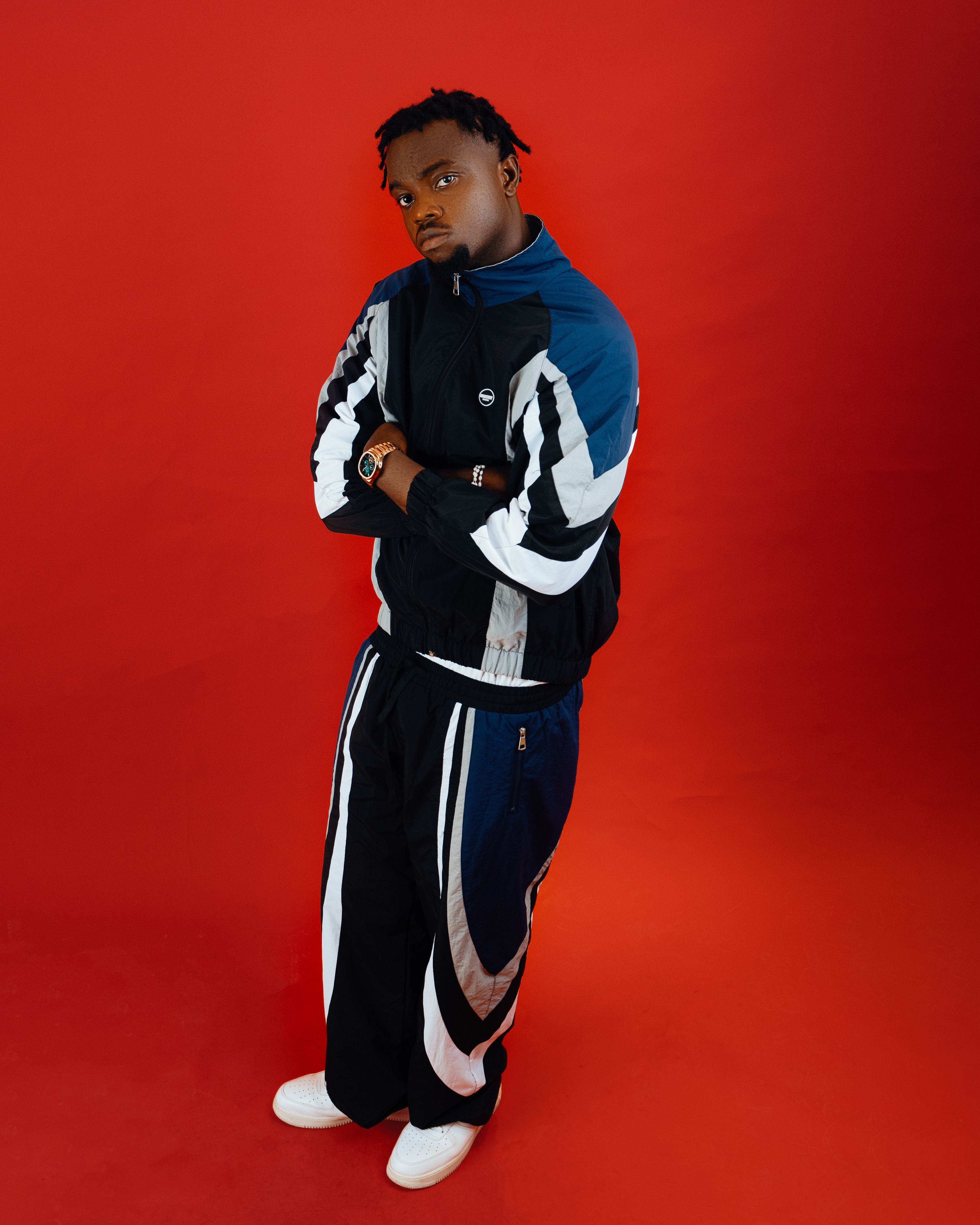
Fleece is where the catalogue’s spread widens for real. A godspeed hoodie was logged between about $200 and $270, and sweatsuits ran from $155 for Vital sets to about $360 at the top, with the OG Logo Sweatsuit V2 landing near $295. What explains the gap is what is included and how much work sits on the garment: a satin-detailed, heavily embroidered two-piece is a different product from a plain washed set. Purchasing a set is nearly always cheaper than buying the two halves apart, which is why the low end of this band is where the catalogue’s best value sits. Heavyweight fleece and named garment washes such as Black Wash and Grey Wash push individual pieces upward within the band. A full set advertised under $100 is not competing on the same terms.
Denim and Bottoms: $120 to $350
Shorts are the cheapest entry to the brand’s bottoms, running about $120 to $200 across courtside, nylon and cargo styles. The anchors are concrete: Courtside at $120, the OG Logo Nylon short at $130 and the Militia Cargo V3 at $140, which makes this the most predictable band in the guide. Cargo pants are a long way higher: the Wax Flare Premium was observed at $350, its 3M reflective detailing accounting for part of the jump. That number rests on a single sighting, so treat it as the price of a product rather than a category norm. Premium denim came in at $250 for the Infinity Denim V2, with the GS 4Ever denim jacket at the same $250 mark. Denim and cargo pricing reaches furthest from casual streetwear and closest to contemporary designer territory.
Accessories and Small Goods: $60 to $250
Accessories break the assumption that the cheapest entry is always a t-shirt. Watches, observed at $80 to $100, are the lowest-cost branded piece in the whole catalogue. Headwear spans $60 to $150, with beanies from roughly $60 to $120 and the GS Forever trucker hat between $125 and $150. At $160, slides put a pair of rubber sandals above a beanie and well above a watch. Belts came in at $250, level with premium denim, a reminder that hardware and leather goods price on their own logic rather than apparel’s. For a first purchase, headwear and watches carry the lowest risk while still being genuinely branded pieces.
Outerwear: Where the Data Runs Out
The honest limit of this guide is jackets. Varsity, leather moto and puffer jackets all sit in the range, yet no retail figures were captured: those pages had sold through by the research date. That absence matters, because outerwear is the category where inflated third-party claims most often appear. One varsity jacket carried an eBay listing at $595, and it is important to read that correctly: a marketplace ask is one seller’s hoped-for figure rather than anything the brand charged. The F.T.D and Chrome Seduction varsity jackets were made in numbered runs of 200 units, and scarcity of that kind drives secondary asks well above any original figure. Until outerwear restocks at source, treat every outerwear number you see as a resale data point rather than retail.
The Second Price Layer: Resale
Resale is not a discount aisle and it is not automatically a markup either. Over roughly forty apparel entries on the StockX brand page, lowest asks were observed between about $75 and $297, a band that straddles retail in both directions. Common tees and older pieces settle near the bottom, since supply outlasts attention once a drop stops being current. The opposite holds for limited pieces, numbered items and collaboration stock such as the collection made with The Lox, holding or exceeding original figures. A lowest ask carries no size guarantee, so the cheapest entry for a design is often a size nobody wants. Use resale as a sanity check on retail, and remember that asks are asks, not completed sales.
Three Ways to Build a Budget
Once the bands are clear, budgeting becomes arithmetic instead of guesswork. The cheapest coherent way in is an accessory plus a tee, which keeps you under the cost of a single hoodie while still delivering two wearable pieces. A set is the most efficient mid-tier spend, because the bundle discount inside the $155 to $360 band beats assembling the same look from separates. The most expensive route is anything numbered, or made in denim, cargo twill or leather, where a single garment can equal three tees. The tiers below reflect observed 2026 estimates rather than advice about what a piece is worth to you. Move each figure up for new-season releases, down for older stock on resale.
- Entry tier, $140-270: a watch at $80-100, or a beanie at $60-120, paired with a tee from the $128-170 band.
- Middle tier, $300-450: either a hoodie at $200-270 and shorts at $120-140, or a Vital set at $155 with headwear.
- Top tier, $250-600: premium denim at $250, cargo pants at $350, or a numbered varsity piece that carries a price only on the secondary market.